

A dining table isn’t just a piece of furniture. It’s a focal point of the room. It’s a participant who’s always involved in those family gatherings, talks, celebrations, and gossip.
The dining room table is the first thing you’ll notice when you walk into a dining room. With time, furniture designs have evolved a lot. Now, homeowners have plenty of choices to pick from. Need a classic vibe? A traditional dining table is there. Living in a cramped space? A flexible modern table is available.
Let’s compare modern vs. traditional dining tables, including their materials, aesthetics, and impact on home design.
What Defines a Traditional Dining Room Table?
Ever seen those movies with a royal setting? A large dining hall with a massive round table sitting in the middle. Have you thought why that round table becomes a key character of the sequence itself? That’s because of its traditional design.
Traditional dining tables carry history on their legs. Craftsmen spend weeks carving intricate details into each leg that always feels like a luxury to watch. Rich wood tones like mahogany, oak, or walnut are hand-selected, and each piece wraps a story around itself through those grain patterns and subtle imperfections.
The defining features
- Ornate detailing that catches your eye from across the room
- Carved legs that look like art pieces themselves
- Rich, dark wood finishes that exude luxury
- Substantial weight and presence
- Classic joinery techniques passed down through generations
These traditional dining tables act as a delegate for their own eras. Victorian elegance. Colonial sturdiness. French provincial grace. They’re above trends. They’re the standard.
But these luxuries deserve a luxurious spot. Something like a formal dining room. They anchor heritage-style interiors pretty well. Crown molding, wainscoting, and a crystal chandelier overhead. Yes, that’s the perfect setting they belong to.
Advantages
The sheer durability is what makes traditional dining tables a classy pick. Your great-grandchildren might inherit yours. The solid wood construction stands up well to daily wear and tear.
They add instant formality and elegance. Guests feel the occasion matters when they sit down. There’s gravitas here. Weight. Importance. Aristocracy.
The rich textures and natural materials create warmth that modern alternatives struggle to match. Wood ages gracefully and develops character over decades.
Nothing suits a heritage-style or vintage interior quite like a traditional dining room table. Traditional dining tables can be that final piece of the puzzle that gives the room its shape and soul.
Considerations
That substantial build? It’s heavy. Really heavy. Moving day becomes more difficult, and rearranging your space requires planning and some muscle.
Flexibility is also limited, especially in modern spaces. Open-plan living rooms don’t always embrace ornate, formal pieces. The contrast can sometimes look jarring instead of charming.
Quality craftsmanship can also come at a higher price. These aren’t impulse buys. They’re thoughtful investments in furniture designed to last for decades.
They’re sturdy, but they still need the right care. Regular polishing keeps wood looking its best. Scratches and water rings can happen, so coasters and placemats are helpful.
Small apartments and minimalist spaces present another challenge. Traditional tables usually need breathing room and can overwhelm compact areas rather than enhance them.
What Defines a Modern Dining Room Table?
Now flip the script entirely.
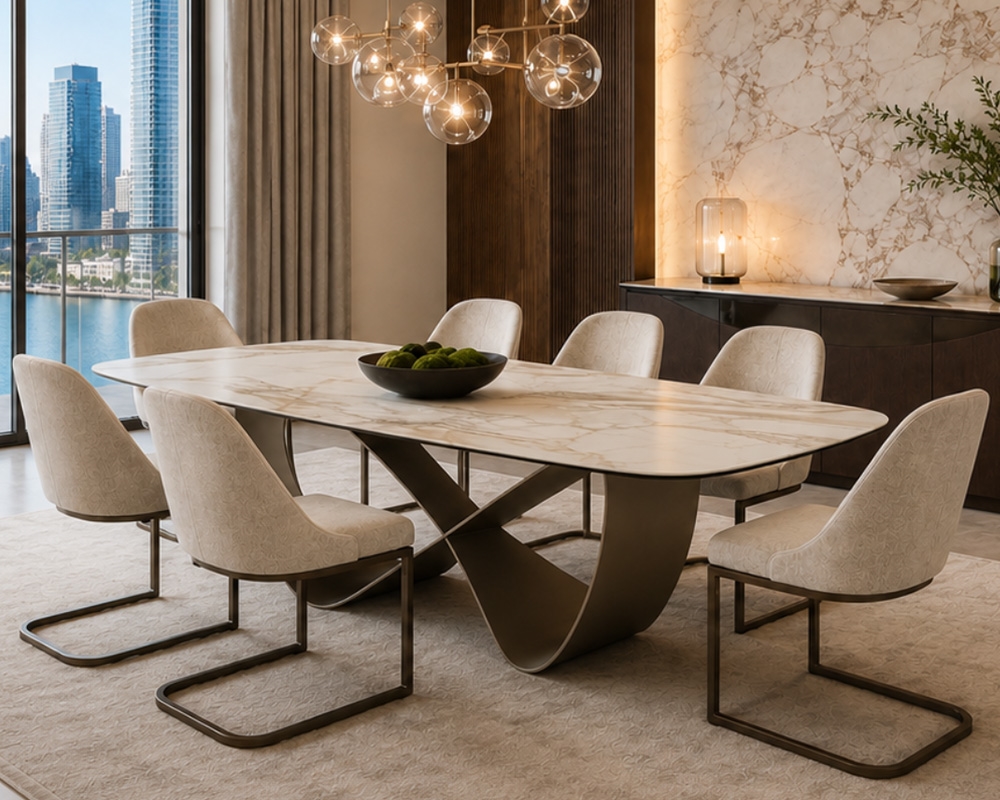
Modern dining tables strip away the excess. They embrace clean lines like a manifesto. Every angle serves a purpose. Nothing decorative exists just for show.
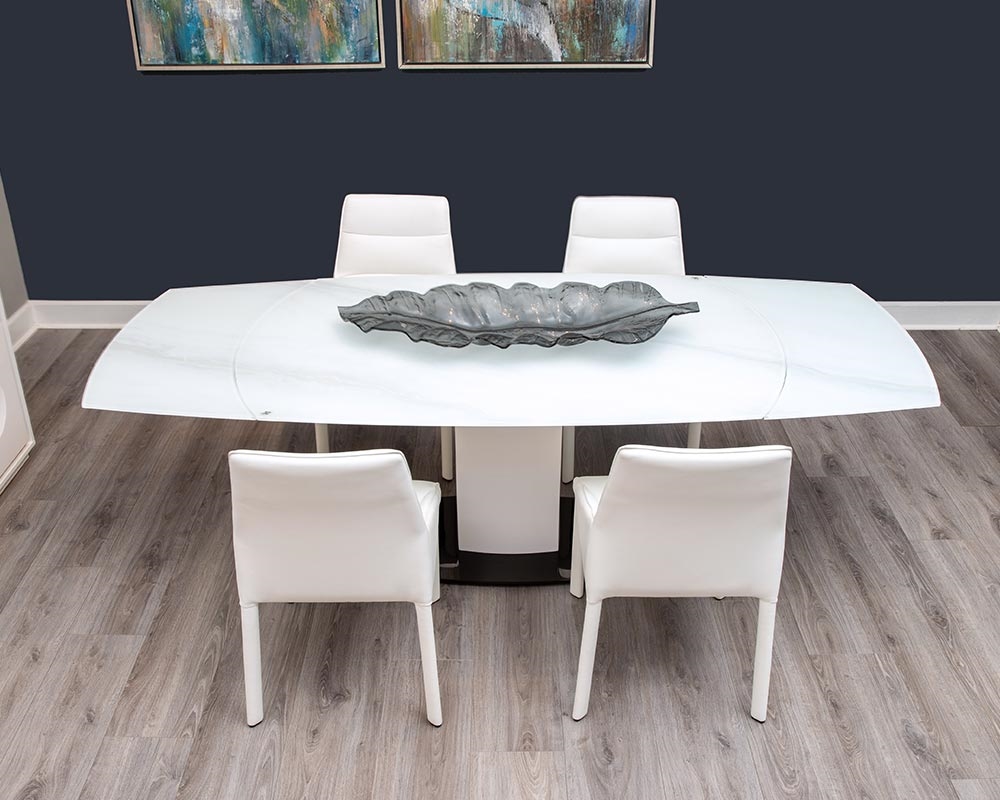
The materials tell a different story. Glass tops that seem to float. Steel legs that disappear into thin air. Marble surfaces are cool to the touch. Light woods like ash or birch brighten rather than darken spaces.
What makes them modern
- Geometric simplicity that calms the eye
- Smooth, sleek finishes that reflect light
- Mixed materials that create visual interest through contrast
- Space-conscious proportions
- Functionality woven into every design choice
Shape variety expands with modern designs. Rectangular dining tables with knife-edge profiles, round or square tables that encourage conversation, and extendable dining table options that grow with your guest list all provide impressive flexibility.
Open-plan homes and contemporary spaces welcome these tables naturally. They don’t fight for attention. They complement the surrounding room, receding when needed and standing out when placed in the spotlight.
Advantages
Modern tables respect your square footage. Space-saving designs mean smaller homes don’t have to sacrifice style for function. Studios and apartments benefit especially from lighter proportions.
Cleaning can also be easier. Glass wipes clean. Metal resists many stains. Properly sealed surfaces make everyday spills easier to manage.
Material variety opens creative possibilities. Glass tops with wooden bases. Metal frames supporting stone. Extendable mechanisms hidden inside slim profiles. You can mix and match until your vision materializes.
Current interior design trends also embrace modern dining tables naturally. They blend, adapt, and fit easily into contemporary interiors.
Considerations
Minimalism can sometimes feel cold. Warmth and classic charm don’t always translate naturally to metal and glass. Some homes benefit from the organic, lived-in feeling traditional wood provides.
Large or highly formal spaces might also make understated modern dining tables disappear visually when the table should command the room.
Trend-based designs can date more quickly. A style that feels current today may not have the same appeal ten years from now, while many traditional designs remain recognizable across generations.
Modern vs. Traditional Dining Room Tables: Key Differences
Here’s a straightforward comparison of how the two styles stack up.
| Feature | Modern | Traditional |
|---|---|---|
| Design Style | Sleek, minimalist | Ornate, classic |
| Material | Metal, glass, light wood | Solid wood, dark finishes |
| Functionality | Space-saving, extendable | Heavier, fixed |
| Mood | Airy, casual, urban | Warm, formal, timeless |
| Maintenance | Low-effort cleaning | Regular polishing required |
| Price Range | Varies widely | Generally higher for quality |
| Best For | Contemporary, small spaces | Formal rooms, heritage homes |
Your lifestyle and home décor goals make all the difference when comparing modern vs. traditional dining room tables.
Modern tables open rooms visually and create breathing space. Light bounces off glass and metal, making the area feel brighter and more spacious.
Traditional dining tables, on the other hand, tend to occupy the room visually. They often become the focal point, with the rest of the dining area arranged around them.
Your choice also affects the ambience. A casual weekday dinner feels different around a glass-topped modern table than around a carved mahogany traditional table.
Neither approach is wrong. The right choice depends on your preferences and the mood you want the space to create.
Blending Modern and Traditional Styles: The Best of Both Worlds
Do you love the modern vibe but can’t overlook traditional charm? This is where things get interesting.
A rustic reclaimed-wood table paired with sleek molded chairs can create an appealing contrast. Traditional warmth meets a modern edge.
You can also flip the idea. An ultra-modern glass table paired with upholstered, tufted chairs inspired by classic interiors creates an unexpected combination that naturally draws attention.
Blending strategies that work
- Use neutral tones such as gray, beige, white, and black as the foundation.
- Balance textures intentionally, like rough wood against smooth metal or soft fabric beside hard glass.
- Use lighting to bridge styles, such as a modern pendant above a traditional table or a chandelier over a sleek contemporary surface.
The key is confidence. When your choices are intentional, the room feels curated rather than confused.
Dining room furniture sets offer pre-coordinated options, but they don’t have to limit you. Mixing pieces from different collections can create a more personal result.
How to Choose Between Modern and Traditional Dining Room Tables
Are the choices and combinations overwhelming you? Here’s a quick and simple guide to selecting the perfect dining table style.
Step 1 - Assess Your Space
Ask yourself:
- Does the room get enough natural light?
- Is it an open plan or an enclosed space?
- Does the space feel small or large?
Step 2 - Consider Your Lifestyle
How do you use your dining space? If you host formal dinners, traditional dining tables can create a grand impression. If your dining room also turns into a workspace, craft station, or weekday eating zone, modern tables may be better because of their flexible and lower-maintenance nature.
Step 3 - Think Long Term
The modern vs. traditional dining room table debate isn't seasonal. Either choice is likely to stay in your home for a while. Think long term and ask yourself:
- How much time do I want to spend on maintenance?
- Do I want a table that adapts to future decor changes?
- Will this table outlast trends?
Quick checklist
- Love symmetry and wood carvings? Traditional may be calling.
- Crave clean lines and uncluttered spaces? Modern may suit you better.
- Want flexibility for different occasions? Consider extendable modern designs.
- Need a warm, timeless feeling? Traditional design delivers consistently.
- Working with limited square footage? Modern designs often save precious space.
- Formal entertaining matters to you? Traditional furniture sets the stage naturally.
Dining Room Design Ideas That Transform Your Home
A dining table does not live alone. To tie the entire look together, you need the right combination of lighting, chairs, rugs, and wall decor.
Modern Dining Elegance
- Glass, marble-top, or farmhouse dining tables
- Acrylic or metal chairs
- Neutral palette with whites, soft gray, and muted tones
- Statement pendant lighting
Result: A clean, bright, and visually open vibe.
Traditional Dining Charm
- Dark solid wood table
- Upholstered chairs with rich fabrics
- Chandelier lighting
- Warm wall tones or wainscoting
Result: A formal, warm, and timeless appeal.
When paired with the right décor elements, both modern and traditional dining tables can transform your home. While shopping at a modern furniture online store, keep an eye on accessories and surrounding pieces as well.
Frequently Asked Questions
What is the main difference between modern and traditional dining tables?
Modern dining tables usually feature cleaner lines, lighter proportions, and materials such as glass, metal, marble, and light woods. Traditional tables typically use solid wood, darker finishes, carved details, and more formal proportions.
Are modern dining tables better for small spaces?
They often are. Modern tables frequently use slimmer frames, open bases, lighter materials, and extendable designs that can make smaller dining areas feel less crowded.
Are traditional dining tables more durable?
High-quality traditional tables made from solid wood can be exceptionally durable and may last for generations when properly maintained.
Can you mix modern and traditional dining furniture?
Yes. Combining contrasting materials, textures, or silhouettes can create a sophisticated transitional look when the overall color palette and proportions remain balanced.
Which dining table style requires less maintenance?
Many modern tables made from glass, sealed stone, or metal require less routine maintenance than traditional solid-wood tables, which may need polishing and more protection from moisture and scratches.
Conclusion
Traditional dining tables offer durability while exuding luxury. Modern designs, on the other hand, bring versatility and clean aesthetics to the space. Neither choice beats the other. They simply stand out in different ways.
The right answer depends on your situation, your home’s architecture, your lifestyle, and your personal aesthetic. Traditional designs have proved themselves across generations, while modern designs continue to push boundaries.
Choose what makes you smile. Explore both dining table styles before deciding. A great place to compare different looks is MH2G, where you can find dining furniture designed to complement a variety of spaces and styles.