

You've finally moved into your place. Or maybe that wobbly table from your college days has overstayed its welcome. Either way, choosing a dining table feels like a bigger decision than it should be.
Here's the thing, though. The dining table is where your family sits down together, where dinner parties unfold on a random Friday, and where the laptop ends up more often than anyone wants to admit.
Getting this one piece of furniture right shifts the entire energy of your dining room. Size, shape, and material—all of it matters. Let's walk through the process without overcomplicating things.
Understand Your Dining Space & Needs
Two things decide whether a dining table works or doesn't: how the space functions and how much room you're actually working with. Skipping either one usually leads to buyer's regret.
Define the Function of Your Dining Space
Before shopping for anything, think about how your dining area actually gets used. Is it for everyday meals with the kids? Hosting guests on weekends? Some people have a formal dining room that only sees real action during the holidays. Others eat every meal at the dining room table because it doubles as the kitchen hub.
Being honest goes a long way. If there are young kids and pets in the picture, that gorgeous marble table might cause more stress than enjoyment. A household that shares daily meals together needs something durable and easy to wipe clean. But if the space leans more toward entertaining and you want something elegant, there's more room to go bold.
Measure Your Space Correctly
This sounds obvious. You'd be surprised how many people skip it entirely.
Grab a tape measure and jot down the length, width, and any awkward corners. The National Kitchen and Bath Association (NKBA) recommends at least 36 inches of clearance between the table edge and the nearest wall or piece of furniture, with 48 inches ideal in high-traffic areas.
That breathing room lets people comfortably walk behind chairs without bumping into other furniture.
Doorways and traffic flow matter too. If the path from the kitchen to the living room runs right through the dining space, a larger table might block the view.
When shopping for modern furniture online, having exact measurements on hand saves a painful return later.
What Size Dining Table Do I Need?
Size is probably the single biggest factor that determines whether a table works in a space or fights against it. Too large, and the room feels cramped. Too small, and the table looks lost.
Dining Table Size Guide by Seating Capacity
Picking the right size table comes down to how many people need a seat on a regular basis, not just at Thanksgiving.
| Seating Capacity | Recommended Table Size | Best Shape Options |
|---|---|---|
| 2 to 4 | 36" to 48" wide | Round, square |
| 4 to 6 | 48" to 60" wide | Rectangular, oval |
| 6 to 8 | 60" to 72" wide | Rectangular, oval |
| 8+ | 72" or longer | Rectangular, extended |
Quick rule of thumb: Allow about 24 inches of table space per person so diners have enough room without competing for elbow space.
Choosing the Right Table Shape
Table shape plays a bigger role than most people expect.
Rectangular Dining Tables
A rectangular dining table is the most versatile option. It fits neatly into longer rooms and generally seats more people efficiently. The rectangular shape is a reliable choice when you're unsure which direction to take.
Round Dining Tables
Round tables work beautifully in smaller rooms. They eliminate sharp corners, and conversation flows more easily when everyone can see each other. A round dining table can also create a more intimate atmosphere, making it especially appealing for smaller households.
Square Dining Tables
Square dining tables look clean and modern and work especially well for two to four people. As they become larger, the distance across the table can make conversation and serving less convenient.
Oval Dining Tables
Oval shapes split the difference between round and rectangular tables. They bring the visual softness of curved edges while retaining much of the functionality of a rectangular table.
If you're comparing layouts in more detail, our guide to dining table shapes provides a deeper look at the pros and cons of each configuration.
How to Choose the Perfect Dining Table Style
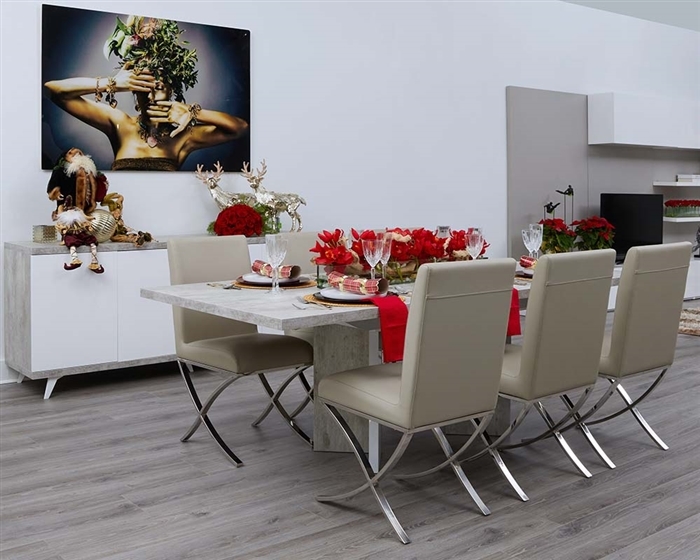
Style isn't just about looks. It's about making every piece in the room feel connected. A beautiful table in the wrong setting can look completely out of place.
Match the Table to Your Room Style
Your dining table should feel like it belongs in the room. Not like it wandered in from a completely different house.
For those who lean modern, look for clean lines, minimal fuss, and materials like glass or smooth stone. A modern dining table with a sleek silhouette can anchor the whole space without overwhelming it.
Contemporary styles can play with shape a little more, using sculptural legs or mixed materials. Traditional and farmhouse looks bring warmth through solid wood and richer finishes, while Scandinavian-inspired design keeps things lighter with pale woods and slender frames.
Keep in Mind…
Take a look at what's already in the room. Dining chairs, lighting fixtures, rugs, and even the modern coffee table in an adjacent living area should feel like part of the same visual story.
Everything doesn't need to match perfectly, but there should be enough balance in color, finish, proportion, or material to connect the spaces.
How to Choose a Dining Table Material for Your Lifestyle
Material choice affects everything from how long the table lasts to how much time you'll spend cleaning it. Here's how the most common options compare.
Wood Dining Tables
Wood dining tables remain one of the most popular choices for good reason. Solid woods such as oak, walnut, or teak bring warmth and durability that can improve visually with age.
If budget is a concern, veneer over engineered wood can deliver a similar appearance at a more accessible price point. Wooden tables tend to work well for daily use and fit comfortably into many décor styles.
Stone Dining Tables
Stone dining tables, including marble and granite options, can bring a sense of luxury and visual weight to the room. They're often substantial and statement-making.
Some stone surfaces, particularly marble, can be vulnerable to staining or etching, so care requirements should be considered before buying.
Glass Dining Tables
Glass tables visually open a room and can work especially well in smaller spaces. They create an airy, contemporary feel and pair well with statement dining chairs.
Fingerprints and smudges are more visible on glass, so regular cleaning becomes part of ownership.
Metal and Laminate Dining Tables
Metal works naturally with industrial and contemporary interiors. It is strong, dimensionally stable, and can be combined with wood, glass, or stone tops.
Laminate offers another practical option. Many current designs provide smooth finishes, straightforward cleaning, and a range of styles at more accessible price points.
If you'd rather take some of the guesswork out of coordinating your table and chairs, browsing complete dining room sets can make it easier to build a cohesive arrangement.
How Do You Know a Dining Table Is High Quality?
Start with the construction. Good joinery, where the pieces connect, should feel tight and secure. Give the table a gentle push. If it wobbles noticeably, take a closer look at the construction before buying.
Check the tabletop's thickness and the stability of the legs. Consider the materials used rather than relying on weight alone. Run a hand across the finish; it should feel consistent rather than rough or uneven.
Also review the manufacturer's warranty and care information. A clear warranty can provide useful insight into what the manufacturer is prepared to stand behind.
What Others Don't Tell You About Buying a Dining Table
Most buying guides focus on size and material. Fair enough. But a few overlooked details can create problems after the purchase.
Leg Placement Matters
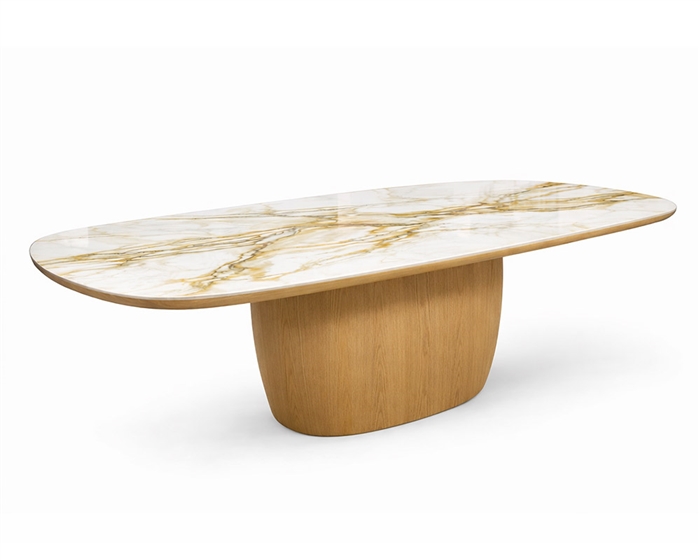
Leg placement matters almost as much as tabletop size. A pedestal base can provide more usable legroom than four corner legs, especially when paired with armless chairs.
That one detail can affect how many people comfortably fit around the table.
Consider the Finish
Glossy finishes tend to reveal fingerprints, scratches, and smudges more readily. Matte and satin finishes can make signs of everyday use less visually obvious on many materials.
Check the Table Height
Dining-table height is not universal. Standard dining tables are commonly around 30 inches tall, while counter-height tables are typically around 36 inches.
Make sure the chairs you choose have a compatible seat height so there is comfortable space between the seat and tabletop.
Tips for Buying the Right Dining Table
Extendable tables can be particularly useful when space is tight but guests still come around. A compact table for daily use that expands when needed lets the room work differently depending on the occasion.
For families, prioritize surfaces that clean easily and materials suited to regular wear. Think about the chairs at the same time rather than treating them as a separate decision.
Armless chairs can pull in and out more easily around tighter tables. Make sure the chair seat height works comfortably with the tabletop. About 10 to 12 inches between the chair seat and table surface is a commonly comfortable range.
A modern side table nearby can also hold serving pieces or extras during larger meals without crowding the primary dining surface.
Basic Care and Maintenance Tips
The right maintenance routine depends on the material. A few basic habits can help preserve the appearance of your dining table.
- Wood: Dust regularly, wipe spills promptly, and use coasters or placemats to help protect the finish.
- Stone and marble: Follow the manufacturer's sealing recommendations and clean spills promptly.
- Glass: Use a microfiber cloth and an appropriate glass cleaner to control fingerprints and smudges.
- Metal frames: Wipe periodically to prevent dust, fingerprints, and buildup from accumulating.
A few minutes of regular care can help reduce wear and preserve the appearance of the table over time.
Find the Perfect Dining Table for Your Space
Choosing the right dining table comes down to understanding the space, being realistic about your lifestyle, and selecting materials that fit the way the table will actually be used.
Whether a compact round table for a cozy apartment or a statement piece for a formal dining room fits the bill, the right dining table is one that works for daily life, not just the room dimensions.
Ready to explore your options? Browse dining tables, chairs, and accessories at MH2G to find pieces that match your style and available space.
Frequently Asked Questions
What is the best dining table shape for a small room?
Round or oval tables can work particularly well in smaller dining rooms. Their curved edges eliminate sharp corners and can make it easier to move around the table without using unnecessary floor space.
Which dining table material is best for families?
Solid wood and laminate are practical options for many families because both can handle regular use and are relatively straightforward to maintain when cared for properly.
How do I know if a dining table is high-quality?
Check the joinery, tabletop construction, leg stability, and finish quality. A well-built dining table should feel stable rather than wobble, and the finish should appear and feel consistent.
Round vs. rectangular: Which shape takes up the least space?
Round tables often occupy less visual space and eliminate protruding corners, which can make them especially useful in compact dining areas. The best option still depends on the dimensions and layout of the room.
How do I choose the right dining table style for my decor?
Look at the furniture already in the room, including its colors, materials, proportions, and overall design direction. The dining table should complement those elements rather than compete with them.