

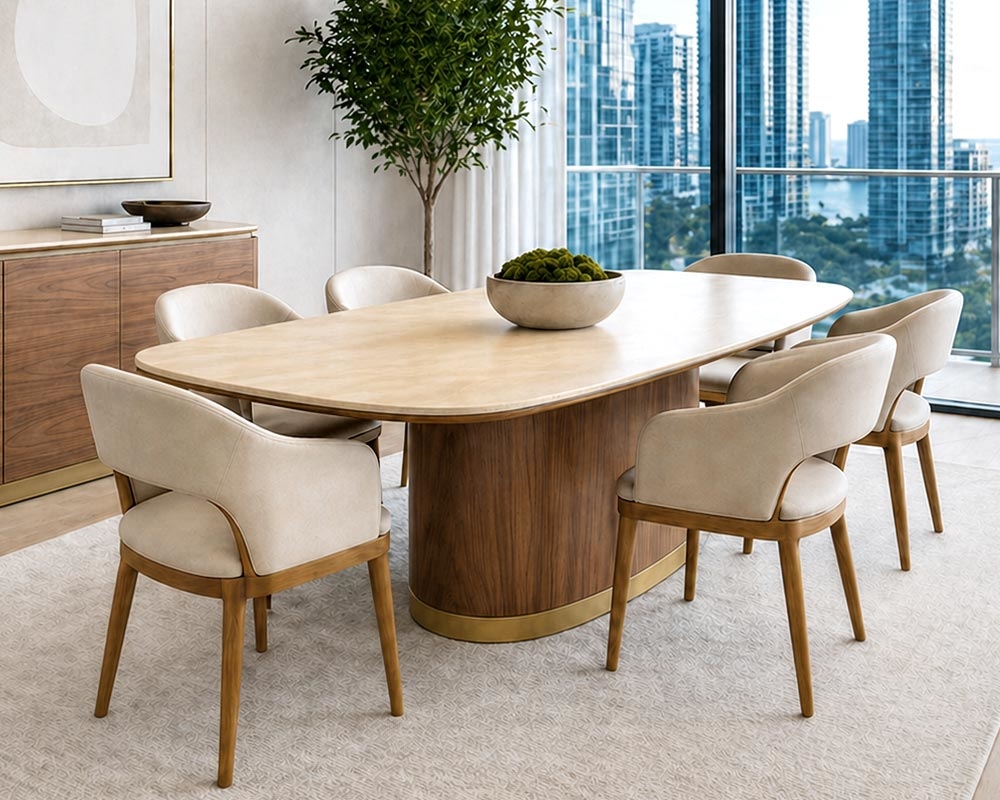
The right dining room rug is large enough that every chair stays on it, even when pulled out mid-meal. Its material should also handle crumbs and spills without creating unnecessary maintenance.
These dining room rug ideas cover sizing, shape matching, material choices, and styles. A well-chosen area rug should work with your dining table, not fight it.
A rug that's too small can make an otherwise well-planned dining space look unfinished. This guide walks through sizing, shape, material, styling, and common mistakes so your dining room rug earns its place in the room.
What Makes a Dining Room Rug Work
A successful dining room rug should visually ground the table and chairs while providing enough usable surface for dining chairs to slide in and out without catching on the rug's edges.
A successful dining room rug supports the table, chairs, and the room's overall layout without feeling undersized or impractical. It's part of the full dining setup, not a decorative afterthought.
Visually, the rug should ground the table and unify the surrounding floor space. Functionally, chairs need to glide in and out without catching on the edge, which matters more here than in many other rooms.
There's no single perfect dining room rug for every space, but matching its size, shape, and material to the table gets you close. This is one area of interior design where practicality and style genuinely overlap.
If you're furnishing the entire room from scratch, browsing modern furniture online first can help you settle on a dining table and chair configuration before choosing a rug to complement it.
How to Choose the Right Dining Room Rug Size
Rug size mistakes are among the most common issues in dining rooms. These three checks can help you land on a practical size before you buy.
Measure the Table
Start with your dining room table's exact length and width rather than the dimensions of the whole room.
A common rule of thumb is to extend the rug roughly 24 inches beyond each edge of the table, giving dining chairs enough room to pull back while remaining on the rug.
Add Chair Clearance
Dining chairs need enough space to slide backward and let someone stand up without the rear chair legs dropping off the rug.
Without enough clearance, a rug can look properly sized when the chairs are tucked in but immediately feel too small as soon as people sit down.
Check Room Balance
Leave a visible border of flooring between the rug and the surrounding walls, even in a smaller dining area.
A rug that runs nearly wall to wall can make the dining room feel cramped instead of visually grounded.
Practical sizing tip: Measure the table first, then mark the proposed rug dimensions on the floor with painter's tape. Pull the chairs back as you normally would and make sure all four chair legs remain within that marked area.
How to Match Rug Shape to Dining Table Shape
Shape pairing works best when it feels intentional rather than mechanically identical.
If you're starting with a coordinated setup, dining room sets can make rug planning easier because the table and chair proportions are already designed to work together.
Rectangular Tables
Rectangular dining tables usually pair naturally with rectangular rugs. The shapes do not need to match perfectly, as long as the rug extends far enough to accommodate the chairs on every side.
Round Tables
Round dining tables can look especially balanced over round rugs because the repeated curved shape softens the dining area and maintains an open visual flow.
Square Tables
A square dining table in a square dining area can work well over a square rug. A round rug is another option when you want to soften the room's harder corners.
Oval Tables
Oval dining tables combine elongated seating with softened edges. Depending on the proportions of the room, either an oval or rectangular rug can work underneath.
Materials to Consider for Contemporary Dining Room Rugs
Material matters just as much as shape in a dining space, where crumbs, food, and spills are part of normal everyday use.
Wool Rugs
Wool provides natural texture, warmth, and durability. It can be a strong option for a contemporary dining room that sees regular use, although quality wool rugs can cost more upfront than many synthetic alternatives.
Synthetic Rugs
Synthetic fibers such as polypropylene are commonly used where easier maintenance and moisture resistance are priorities.
They can be especially practical in homes with young children, pets, or frequent spills around the dining table.
Flatweave Rugs
Flatweave rugs stay relatively low to the floor, helping chair legs slide more smoothly and making vacuuming and spot cleaning easier beneath a regularly used dining table.
Indoor-Outdoor Rugs
Indoor-outdoor rugs can be a practical choice for dining areas near kitchens, patios, or exterior doors where moisture and heavier traffic are common.
If your dining space opens onto a patio, the MH2G outdoor rug collection includes designs intended for indoor and outdoor environments.
They can also pair naturally with an outdoor dining table set when you're creating coordinated dining areas inside and outside.
Modern Dining Room Rug Ideas by Style
Once the practical questions of size, shape, and material are settled, the rug's style is where you can add more personality to the dining room.
Neutral Texture
A low-contrast, textured neutral rug can add depth beneath a wood dining table without competing with nearby furniture finishes.
A cowhide rugs option can introduce an organic shape and more visible texture when you want the floor covering to have a stronger design presence.
Geometric Pattern
Geometric patterns can work particularly well in a modern dining room with simple furniture. The rug introduces graphic interest without requiring additional artwork or decorative furniture.
Soft Color
A muted, softer-color rug can balance the harder appearance of a glass or marble dining table and introduce warmth without pulling attention away from a statement tabletop.
High-Contrast Design
A high-contrast rug can become the visual focal point of the dining area.
This approach usually works best when the table and dining chairs are more restrained, preventing the rug pattern from competing with busy upholstery, wall treatments, or surrounding decor.
Dining Room Rug Mistakes to Avoid
A few sizing, maintenance, and safety mistakes appear repeatedly in real dining rooms.
Rug Too Small
A rug that's too small can leave chair legs catching the edge every time someone sits down or stands up.
When the room allows it, sizing slightly larger is often more functional than choosing a rug that barely fits beneath the dining table.
Pile Too High
A thick, high-pile rug can make dining chairs less stable and harder to slide smoothly.
Low-pile and flatweave rugs are often more practical underneath dining tables that see everyday use.
No Rug Pad
Skipping a rug pad isn't only a styling concern. Loose or unsecured rugs can move, curl, or bunch beneath foot traffic.
A study available through the National Institutes of Health's PubMed Central estimated that 37,991 adults age 65 and older were treated annually in U.S. emergency departments for falls associated with carpets and rugs during the study period.
A properly selected rug pad can help keep a dining room rug more stable while also providing a protective layer between the rug and flooring beneath it.
Pattern Overload
Too many competing patterns across the rug, dining chairs, walls, and accessories can make the dining room feel chaotic rather than coordinated.
Choose one strong visual element and allow the surrounding pieces to support it.
How to Care for a Modern Dining Room Rug
Once you've chosen the right rug, a simple maintenance routine can help preserve its appearance and performance.
Vacuum Regularly
Vacuum regularly to remove crumbs and debris before they settle deeper into the fibers, particularly beneath the dining table where food particles are most likely to accumulate.
Blot Spills Quickly
Respond to spills quickly. Blot rather than aggressively rubbing the affected area, and follow the cleaning instructions provided for the specific rug material.
Rotate the Rug
Rotate the rug periodically so foot traffic, furniture use, and sunlight exposure are distributed more evenly across the surface instead of becoming concentrated in one area.
Frequently Asked Questions About Dining Room Rugs
How big should a dining room rug be?
A common guideline is for the rug to extend roughly 24 inches beyond the dining table on each side, giving chairs enough room to remain on the rug when they are pulled back.
What rug material is best under a dining table?
Wool, flatweave, synthetic, and indoor-outdoor rugs can all work well under a dining table. The best choice depends on your preferred look, maintenance expectations, household traffic, and likelihood of spills.
Should the rug match the shape of the dining table?
No. The rug does not have to match the dining table shape exactly. The most important considerations are proportion, chair clearance, and whether the combination feels visually intentional within the room.
Can I use a light-colored rug in a dining room?
Yes. A light-colored rug can work well in a dining room, particularly when the material and construction are appropriate for regular cleaning. Keep in mind that lighter tones may show spills and debris more readily.
Do I need a rug pad under a dining room rug?
A suitable rug pad is generally useful because it can reduce sliding and bunching while helping protect the flooring beneath the rug. Make sure the pad is compatible with both the rug and your specific flooring material.
Conclusion
The right dining room rug should do more than add color or pattern. It should support the dining table, allow chairs to move naturally, suit the amount of daily traffic the room receives, and visually connect the whole dining area.
Start with size, then evaluate shape and material before focusing on pattern or color. Those practical decisions make it much easier to choose a rug that looks intentional and works comfortably during everyday meals.
Whether your dining room calls for a textured neutral rug, a modern geometric design, a softer color palette, or a bolder statement piece, prioritize proportion and function first.
Explore MH2G rugs alongside dining tables, chairs, and complete dining-room furniture to create a coordinated space.